



“Like a Fragile Doll”
Natasha decided that no matter how long Gabriella had the tube – even if it was for the rest of her life – that was fine. As long as her daughter is healthy and thriving.
Gabriella’s Story
Like many other parents of tube fed children, Natasha Akers didn’t know anyone with a feeding tube before the birth of her daughter, Gabriella. “I didn’t know what a G tube was,” Natasha tells us.
Feeding tubes were hardly the first thing on Natasha’s mind nine years ago when Gabriella surprised her by arriving early during a family vacation. Tiny Gabriella was taken right to neonatal intensive care and had to stay in the NICU at a hospital away from the family’s Connecticut home until she was stable enough to be transferred.
Because she was premature and had other medical issues at birth, Gabriella’s early years felt uncertain and often frightening. “She was a NICU baby for three months,” says Natasha. “She’s been to the OR (operating room)18 times before she was two.”
“Like a Fragile Doll”
When Natasha was able to take her daughter home, Gabriella was still unable to eat by mouth, so her doctors placed a gastrostomy tube (G tube) to help get her get the nutrition she would need to grow. Natasha says she felt lucky to have as much information about the tube as she got. Before Gabriella was discharged, Natasha spent two full days in the hospital learning how to give Gabriella her feeds and how to clean and maintain the tube and extension sets. The gastroenterologist was often accompanied by a social worker, who could offer the family extra support and resources.
“She was in the hospital for three months before she came home, so maybe the length of time allowed me to get more education on what to do,” Natasha says.
Even still, getting used to tube feeding at home was a process of trial and error. The tube would sometimes fall out, sending them rushing to the hospital to have it replaced because Natasha didn’t have a backup.
“For many, many years, she was like a fragile doll,” she says of Gabriella. She would pick her daughter up as though she were made of glass and worried about dislodging the tube every time she dressed her.
Unexpected Milestones
As Gabriella’s health stabilized and Natasha became more familiar with her daughter’s G tube, the cycle of feeding, flushing, and changing became more routine. She stopped asking the gastroenterologist when the tube could come out and focused on watching her daughter grow up.
Natasha didn’t expect it when Gabriella began trying to eat by mouth. Being around family members eating by mouth for the first few years of her life had not really inspired her to try. Gabriella is on the autism spectrum, and when she started school, Natasha says she had trouble understanding why she had a feeding tube and the other kids didn’t.
But a year or so ago, something changed. Natasha credits the social environment of Gabriella’s school, where watching peers eating made her want to imitate them and start taking more food by mouth. By the age of nine, Gabriella was getting most of her nutrition by mouth. At her regular check-ups, if her doctors recommend more nutrition, Gabriella would take some formula through the tube, and did not take medicine orally until recently.
Natasha decided that no matter how long Gabriella had the tube – even if it was for the rest of her life – that was fine. As long as her daughter is healthy and thriving.
“As parents, no matter what, we’ll do anything for our kids,” she says. “So we just navigate it. We learn to figure it out.”
Baby Steps Add Up to Big Changes
Natasha and her family definitely figured out tube feeding, to the point that having the tube no longer felt “different” to Gabriella. Natasha says she and her daughter are so used to it that it would feel strange if she didn’t have the tube.
Natasha rarely thought about the tube unless she was checking the balloon or exchanging an old tube for a new one, which she did at home every three months. Gabriella got excited every time she got a new tube, dancing around with joy.
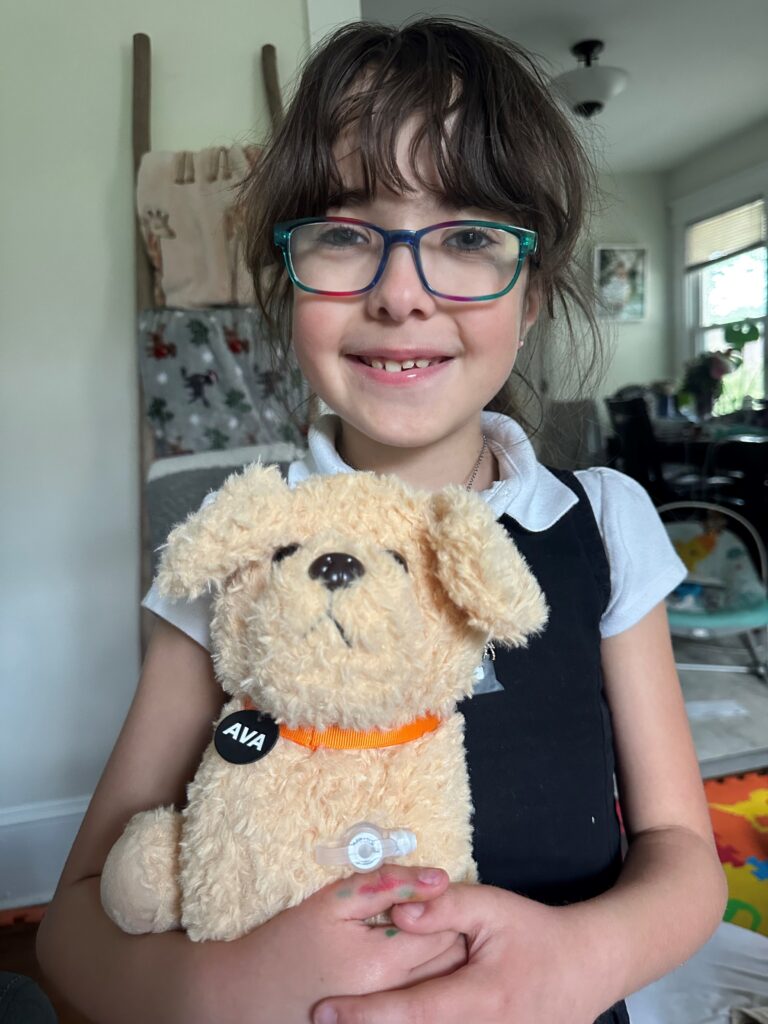
She recently received something else new: her MIC-KEY Cares welcome kit, including Ava the goldendoodle, an educational toy. This very special plush has a MIC-KEY G tube – the same kind Gabriella used – in its belly to help kids learn about the tube and how to use it.
Natasha tells us she found out about MIC-KEY Cares from another mom on one of the many Facebook groups she’s part of. She joined right away, and a few days later received her welcome kit in the mail.1 Gabriella was immediately in love with Ava.
“It’s probably the first thing I’ve ever seen that makes her feel more included,” says Natasha. “She has 50 stuffed animals on her bed, but none of them have a G tube.”
Going With the Flow
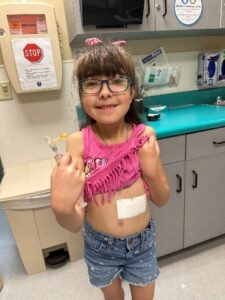
In the autumn of 2025, Gabriella’s doctors were confident enough in Gabriella’s ability to get her nutrition by mouth that they decided she could have her G tube removed. Gabriella is now doing well (and still loves Ava, her fluffy friend with the feeding tube).
Tubie parents share tips and learn about new resources through online and in-person support groups and networks. Through one of these, Natasha met another mom in her area whose 2-year-old son has a feeding tube. She tries to help her out and answer some of her questions about parenting a tube fed child.
Her biggest piece of advice? Go with the flow. There will be good times and challenging times. No matter how long your child needs their feeding tube, it’s best to live in the moment and take things day by day.
- MIC-KEY Cares Welcome Kits are currently only available to people who live in the United States, but anyone can sign up for the MIC-KEY Cares program and get tailored content delivered to your inbox each month! You can also join our Facebook group and download the MIC-KEY Cares App for iOS or Android. Avanos is working on making the app available soon in countries outside the U.S. ↩︎
