Percutaneous Endoscopic Gastrostomy (PEG) Tube Procedure
What to Expect Before the Procedure?
Ask Questions
A “pre-operative exam” will be done before the surgery to make sure you are well enough to have the tube placed. It also gives a chance for you and a loved one to meet the healthcare team to ask any questions. The team might also take blood samples, skin swabs, and/or pictures of your body where the tube will be placed. Skin swabs are taken with a cotton ball. You may also visit the anaesthetic team to make sure you can have an anaesthetic. The exam usually takes place in the clinic a week or so before surgery.
Keep clean
The day before surgery take a bath or shower and wash your hair. This lowers the risk of getting an infection. Make-up and nail polish should also be removed. Your healthcare team will go over instructions on what to do.
Have an empty stomach
It is important to not eat or drink for several hours before the operation. This is sometimes called being “NPO”, “fasting,” or “starving”. The team at the hospital will give you details about this. Follow the instructions closely or it could delay the surgery.
If your doctor is doing a procedure using x-rays to place your tube, then you will need to fast before surgery. You may also be asked to swallow a thick chalky milkshake-like drink called “barium” the night before the operation. Barium can be seen in the x-ray. The barium helps show where the tube is being placed.
Give consent
You will be asked to sign a consent form. This gives the team permission to do the operation. The healthcare team will go over all the risks and benefits of the surgery.
Going to the operating room
When the operating team is ready, you will be taken to the surgery room. Children and young adults may have a parent or guardian stay with them for longer, usually until the patient is getting sleepy.
What to Expect During the Procedure?
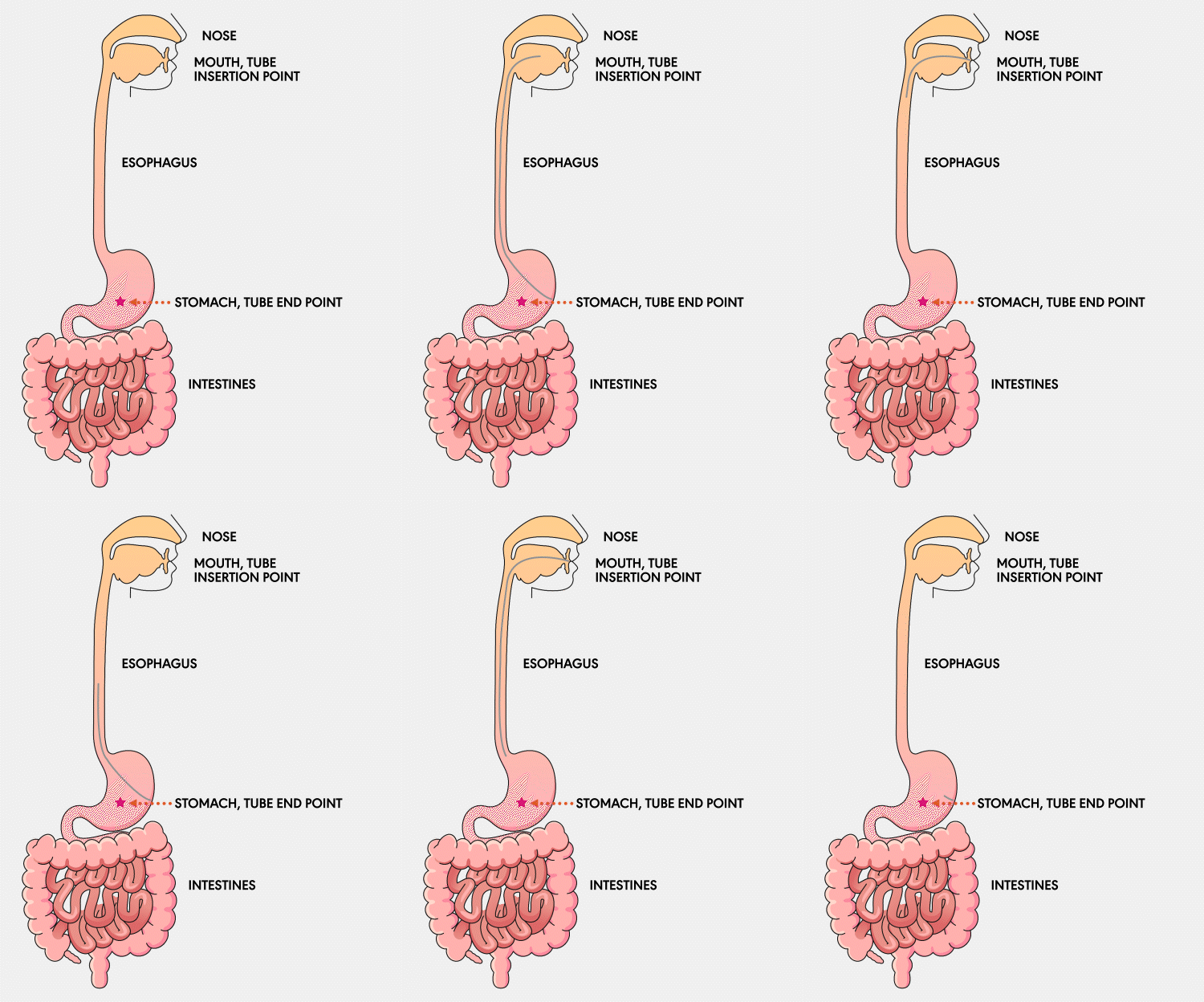
During an operation, an opening is cut through the skin and muscle into the stomach and the PEG tube is placed through the opening. An endoscope is passed through the mouth and down the food pipe (esophagus) into the stomach to make sure the tube is placed in the correct place. An endoscope is a long flexible cable with a camera and a powerful light at the end which can be seen through the skin. Using the light as a guide, the gastrostomy opening is made through the skin into the stomach and the tube is placed through this opening.
Children and young adults will usually have the procedure done in the operating room with a general anaesthetic. They will be asleep while the tube is put in.
Adults may have the procedure done in an “Endoscopy Unit”. You will be sedated before the operation, so that you are not aware of your surroundings. You will also have a local anaesthetic to numb the area where the tube will be put in. A mouth guard is placed in your mouth to protect you from accidentally biting your tongue or the endoscope.
Once the PEG is in place a small bumper holds the end of the PEG in place inside the stomach and stops it from being pulled out. A disc sits on the outside of the body to help keep the tube in place.
It might not be possible to place the PEG Tube during the first attempt. This can be for several different reasons. If this happens, a different method of placing the tube may be used, usually on a different day.
What Should I Expect After the Procedure?
You will go to the recovery area after surgery to recover from the anaesthetic. An IV (intravenous infusion) for extra fluids is often used to keep you hydrated. Pain medicine will be given to keep you comfortable. You will then be taken back to your hospital room. Often, you may need to spend a night in the hospital while recovering.
Having a general anaesthetic might cause vomiting or feeling sick. You might also get a sore throat afterwards, feel a bit dizzy, or feel cold and shivery.
Sometimes the food-pipe (esophagus) or stomach might get damaged by the endoscope. This may cause some mild pain or soreness for a couple of days after the tube is placed.
Starting to use the PEG Tube
PEG Tubes can usually be used right away. The nurses will check it to make sure it is working by putting a small amount of water down the tube. Then, they will give a small amount of liquid nutrition. The amount of nutrition will increase slowly over the next few days until your body is handling the food well.
Pain
After surgery, you might feel bloating, cramping, or a tummy ache. This is because air is sometimes put into the stomach to help with the tube placement. You will have some pain at the site. The site is most painful for the first couple of days after surgery. The pain gets better each day. Most people feel better within 2 weeks. Talk with your healthcare team on how to control the pain.
Drainage
It is common to have some oozing at the site. As the site is healing, you may have some mild bleeding at the site. It is normal to have it crust and drain. The drainage can come and go. This can last several weeks. It is helpful to use a dressing like gauze at the site to help soak up some of the drainage to keep the skin healthy and dry.
Redness
As the skin is healing from surgery, the site can have a little bit of redness or irritation. This is normal and will improve as the site heals.
Activity
Most people can get out of bed, sit in a chair, or walk the day of their surgery. You can expect your usual activity after about 2 weeks.
Going home
To go home, the healthcare team will want to make sure you are ready. This includes:
- Pain is under control
- Feedings are tolerated
- Training on how to care for your tube and skin around the tube
- Training on who to call and when to call if you have concerns


What Should I Expect at Home?
Before you leave the hospital, you should be given an appointment for a check-up. This might be back at the hospital, the feeding tube clinic, or at home by the home helath team. You will also be given instructions and emergency contact details in case you have any problems.
Key takeaways for home:
- Practice “good” tube and skin care
- Understand the feeding schedule
- Flush your tube regularly
- Know what to do with concerns
When to call your healthcare team
PEG Tubes are a safe way to get nutrition and fluids, but sometimes problems can happen. Some problems need urgent attention while some problems do not.
If you notice any of the urgent problems below, then do not put anything else down the tube until you have talked to your healthcare team. You might need to go back to the hospital to have the tube checked.
Urgent problems:
- Severe pain, especially if this happens while the tube is being used for feeding or medicine
- Bleeding around the tube opening that will not stop
- Leaking of fluid or feeding from around the tube opening in the feeding tube head
If you notice any of the non-urgent problems below, then monitor the problem and contact your healthcare team if the problem becomes worse over time. You might need to go back to the hospital or clinic to have the tube checked.
Non-urgent problems:
- Signs of infection:
- Redness
- Swelling
- Pain
- Smelly drainage
- Warm skin
- Fever
- Large amount of drainage that does not go away or cause redness on skin
- Extra amount of skin tissue at site
- The tube falls out or moves out of place. If this happens you will need to replace the tube before the stoma closes.